Re-Enter Nature
What if the boundary between humans and nature was never real?
These paintings began as finished landscapes.
Framed. Complete.
Then, I followed the impulse to re-enter them.
To do so meant layering more material.
Metal leaf.
Mother-of-pearl.
Handmade paper.
Paint.
As layers accumulated, the surfaces grew increasingly complex — almost chaotic at first, every element seeming to compete for space.
But over time, patterns began to emerge organically, synchronistically. There was an organizing intelligence in the composition emerging in a way that felt familiar.
The way growth happens in nature.
Everything growing up together, all at once.
With time, intelligently finding their most efficient position.
In that organic process from seeming chaos to coherence, the landscapes stopped feeling like images. They began feeling more like environments — ecosystems— fields of relationships where light, material, and vision interact as a whole system, interdependent on each other, with me right inside it.
These paintings are the first glimpses of something larger — installation environments where viewers move through layered materials and shifting light to experience themselves as part of the intelligent ecosystem.
Re-Enter Nature invites a different kind of looking.
Not observing nature from a distance,
but recognizing ourselves as it.
Re-Enter Nature began when I returned to paintings that were already finished.
Several landscapes had been framed, exhibited, considered complete. Months later — sometimes more than a year — I felt an impulse to reopen them. I followed that pull and allowed the paintings to evolve through accumulated layers.
The title reflects both the studio process and the larger inquiry. I was literally re-entering finished paintings — but the process gradually revealed a deeper question: what might it mean to re-enter a relationship with nature that recognizes humans as part of the same living system?
As the process unfolded, three elements emerged as shaping the work.

Months often passed between each return to a painting. That distance created the conditions to see differently. What once felt resolved, over time, and with new eyes, could be seen as the foundation for something new.
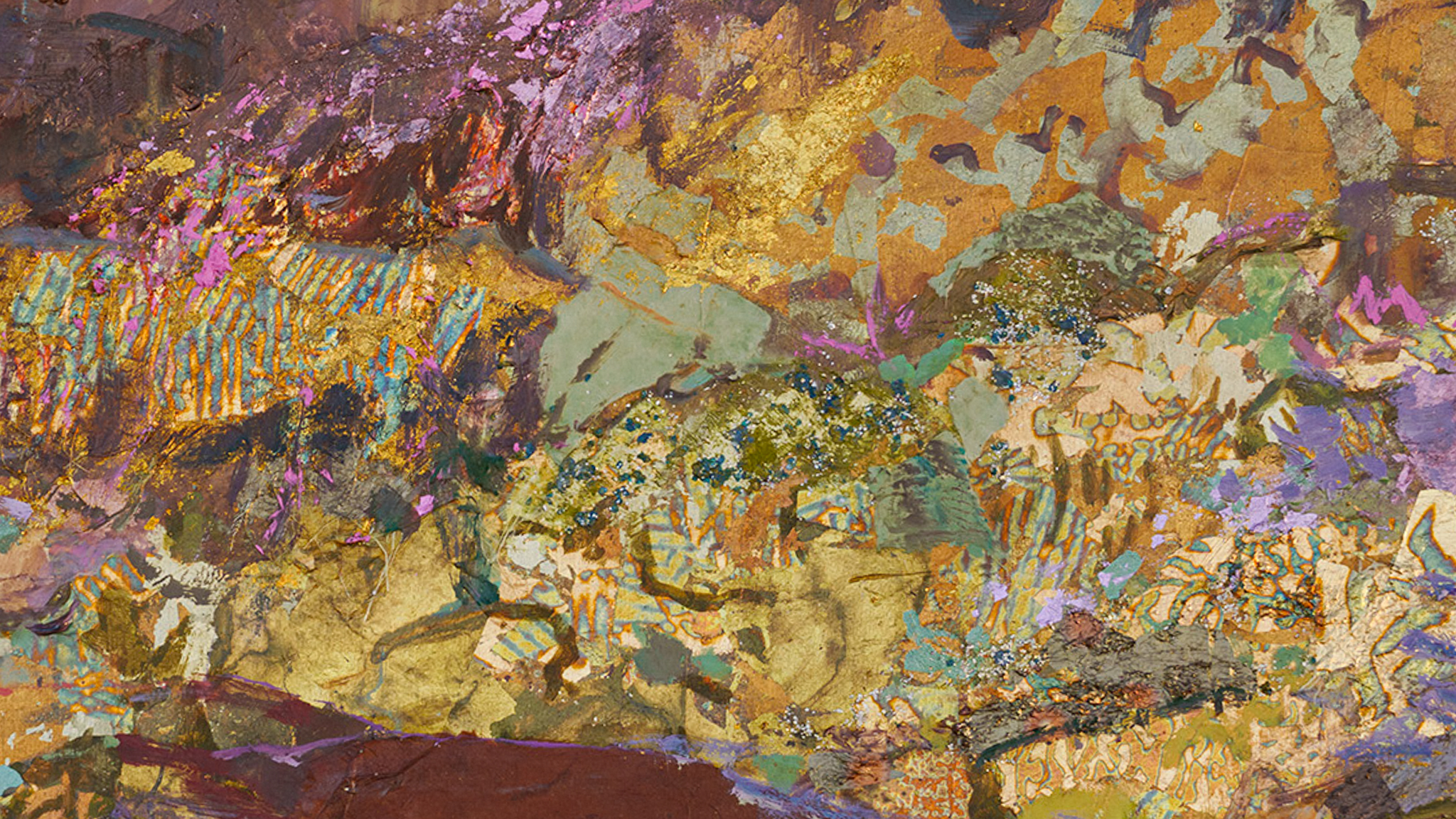
Each piece was already a composed whole - so re-entering meant not covering the image and starting over, but layering over it with new material, working with the existing foundation, to build texture and depth.
New materials entered the paintings — handmade paper, metal leaf layered over paper, paint layered over leaf and paper, and shell.
These dimensional, light sensitive, and textured layers alter how light moves across the painting and how the materials relate to one another.
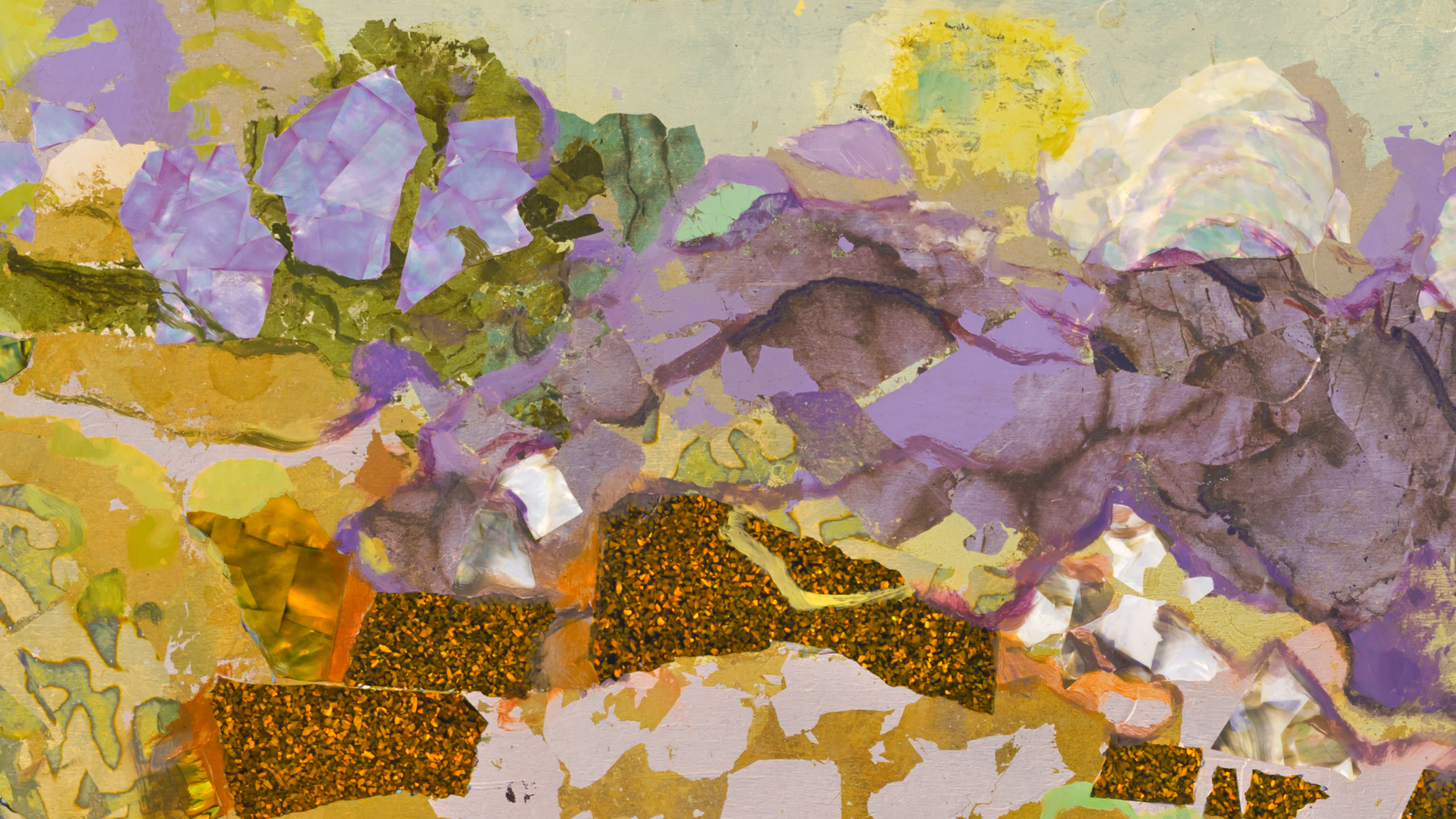
The materials themselves —metal leaf, abalone shell, and handmade papers —carry patterns shaped through natural processes - formed first by nature. Working with them became less about forcing their form to fit my composition and more about responding to the patterns, material quality, and movement already present within them. They each carry their own intelligence design.
The longer you stay, the more relationships reveal themselves.
The investigation unfolds across six works.
Each one became its own evolving terrain.
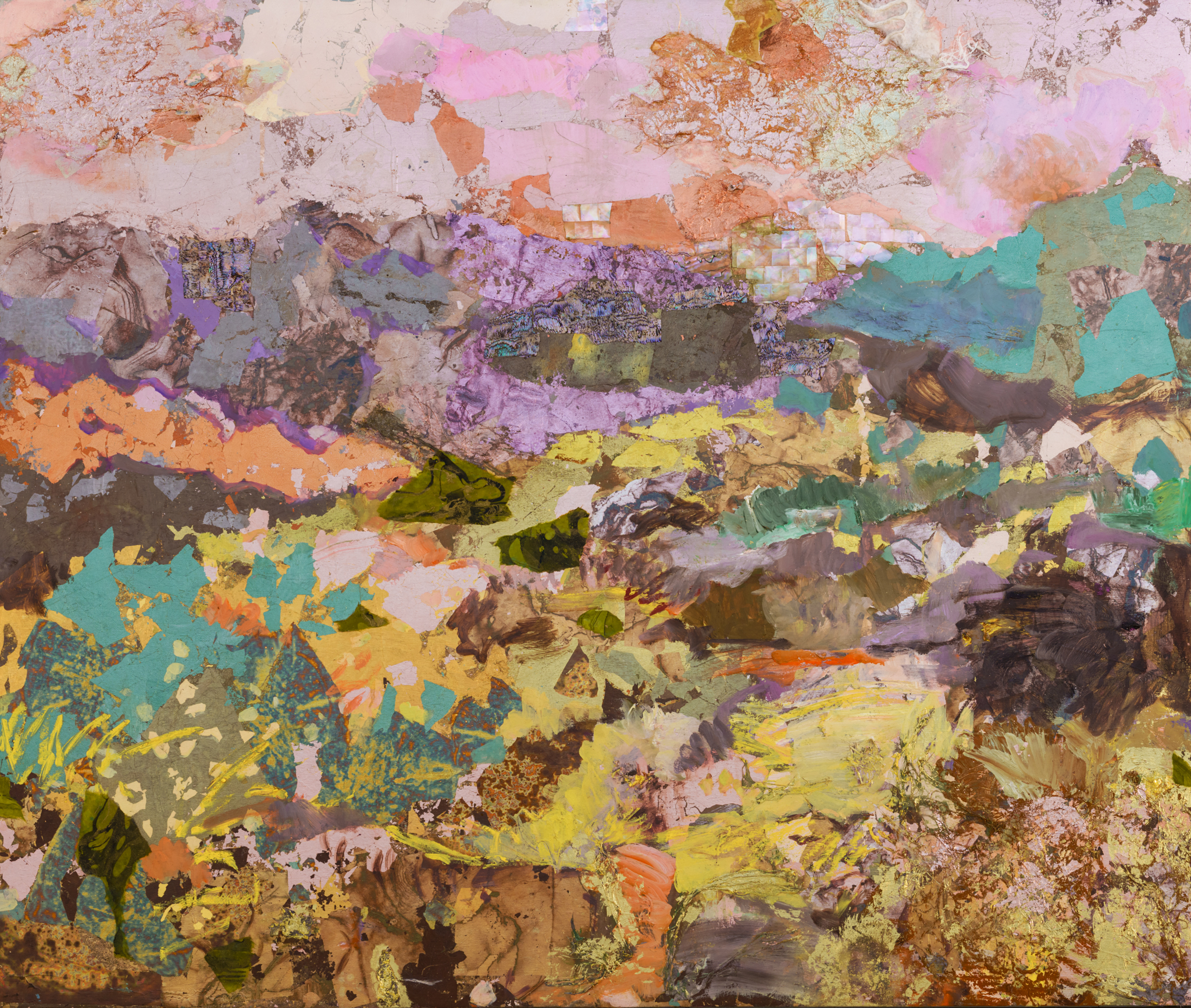
Centuries of Growth
Re-entering this painting began with layering oil stick, torn paper, metal leaf, and mother of pearl, across the original surface. Initially the image grew increasingly complex — almost chaotic at first. Over time the elements began organizing themselves through relationship rather than control, and the painting started behaving less like a picture and more like terrain — a place to re-enter rather than simply observe. That shift became the foundation for the entire Re-Enter Nature series.
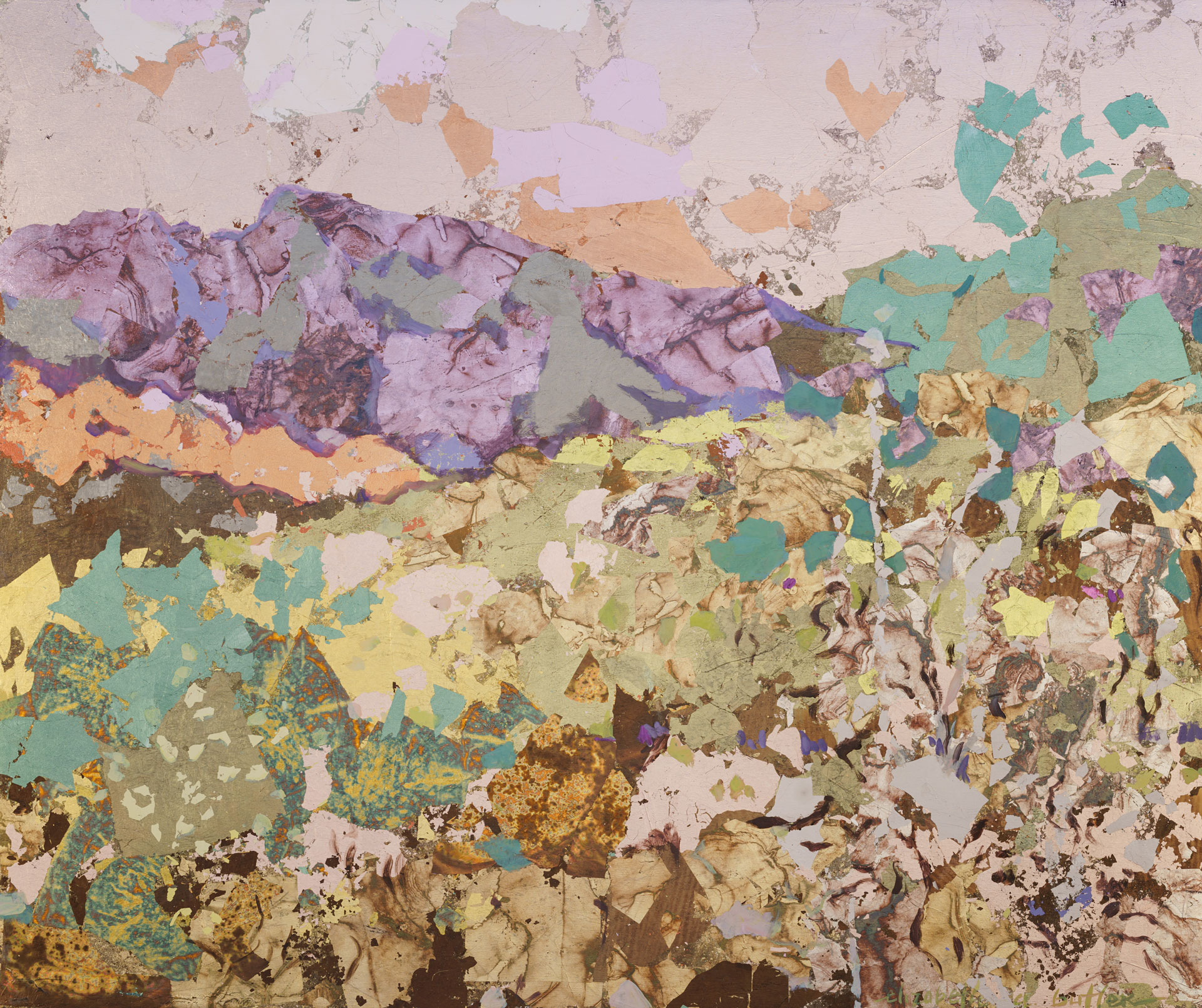


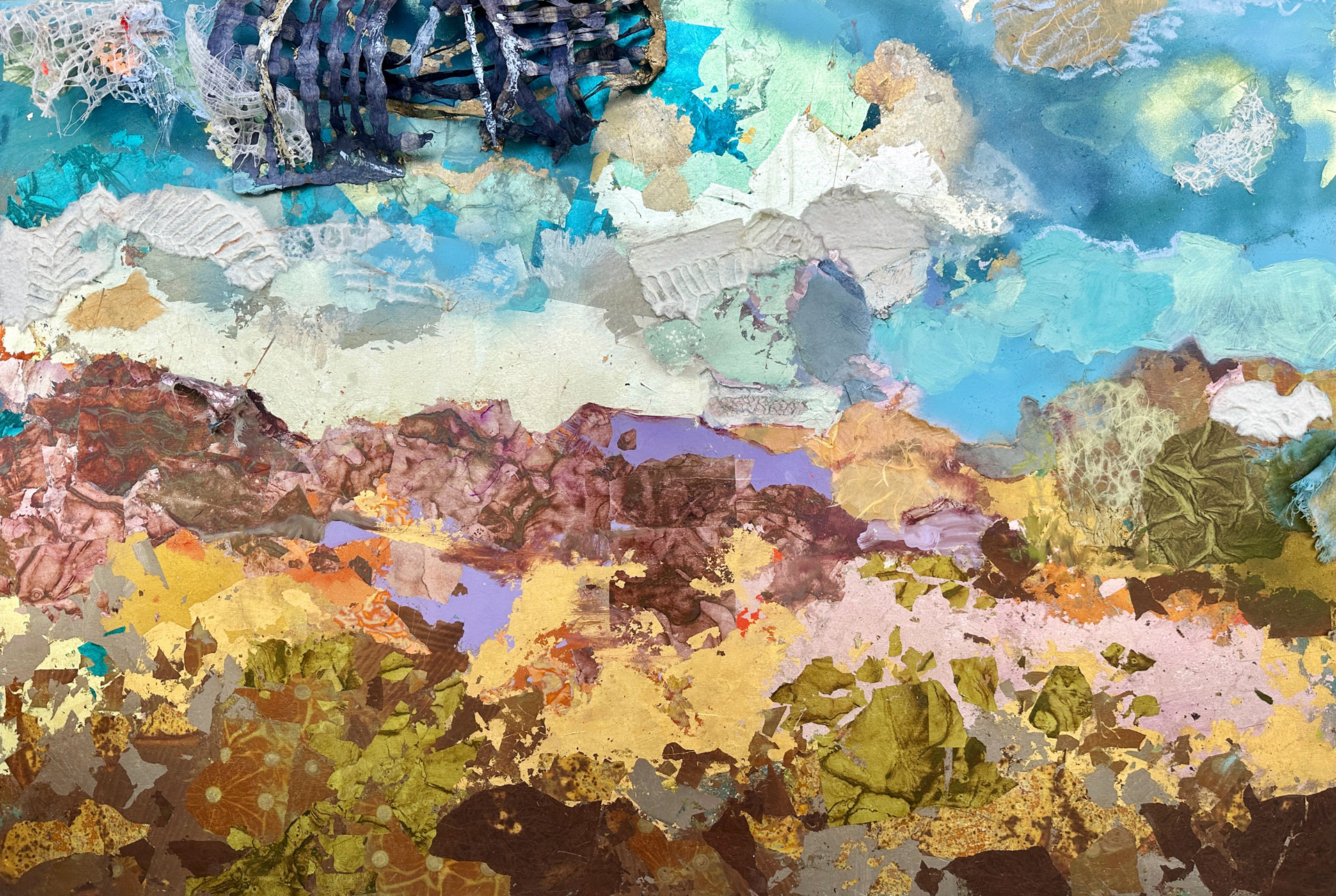
Discover Me
Re-entering this painting introduced layered paper and folded linen that created small dimensional pockets within the surface. In several places the layers opened enough for a hand to slip behind or into the painting itself. The landscape was no longer something to observe from a distance — it became something to move into and explore.
In that moment I realized I wasn’t re-entering paintings to make more paintings, but to discover environments waiting to emerge beyond the frame.
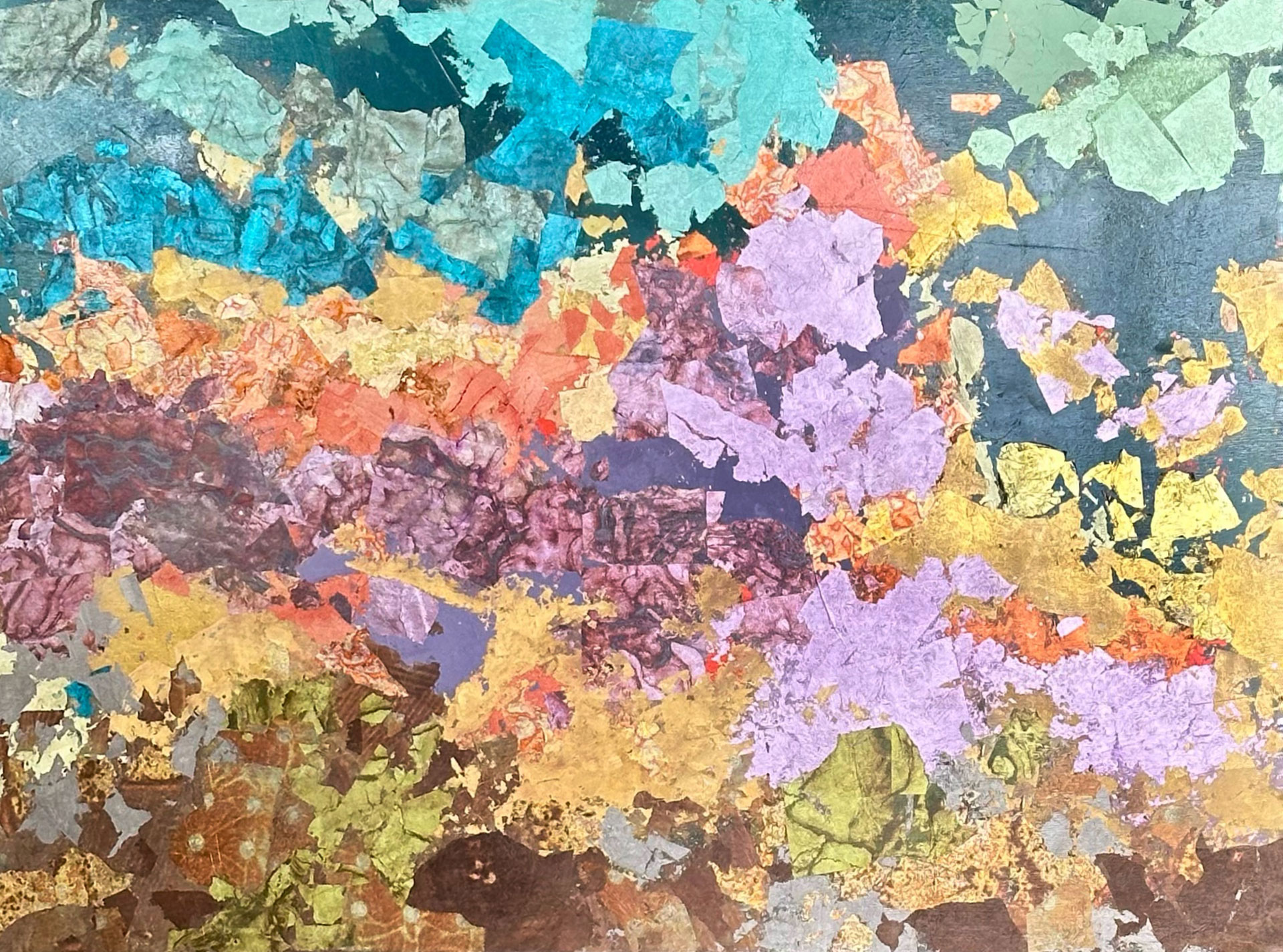
Dyed silver leaf and variegated brass leaf carry patterns created through heat and chemical reactions interacting with the metal. Even within controlled craft processes, the results remain partly unpredictable — flowing structures that often resemble mineral veins, water currents, or shifting clouds.
Introduced into the paintings, these variations provide patterns the composition can respond to rather than impose, allowing relationships to emerge through layering and time.
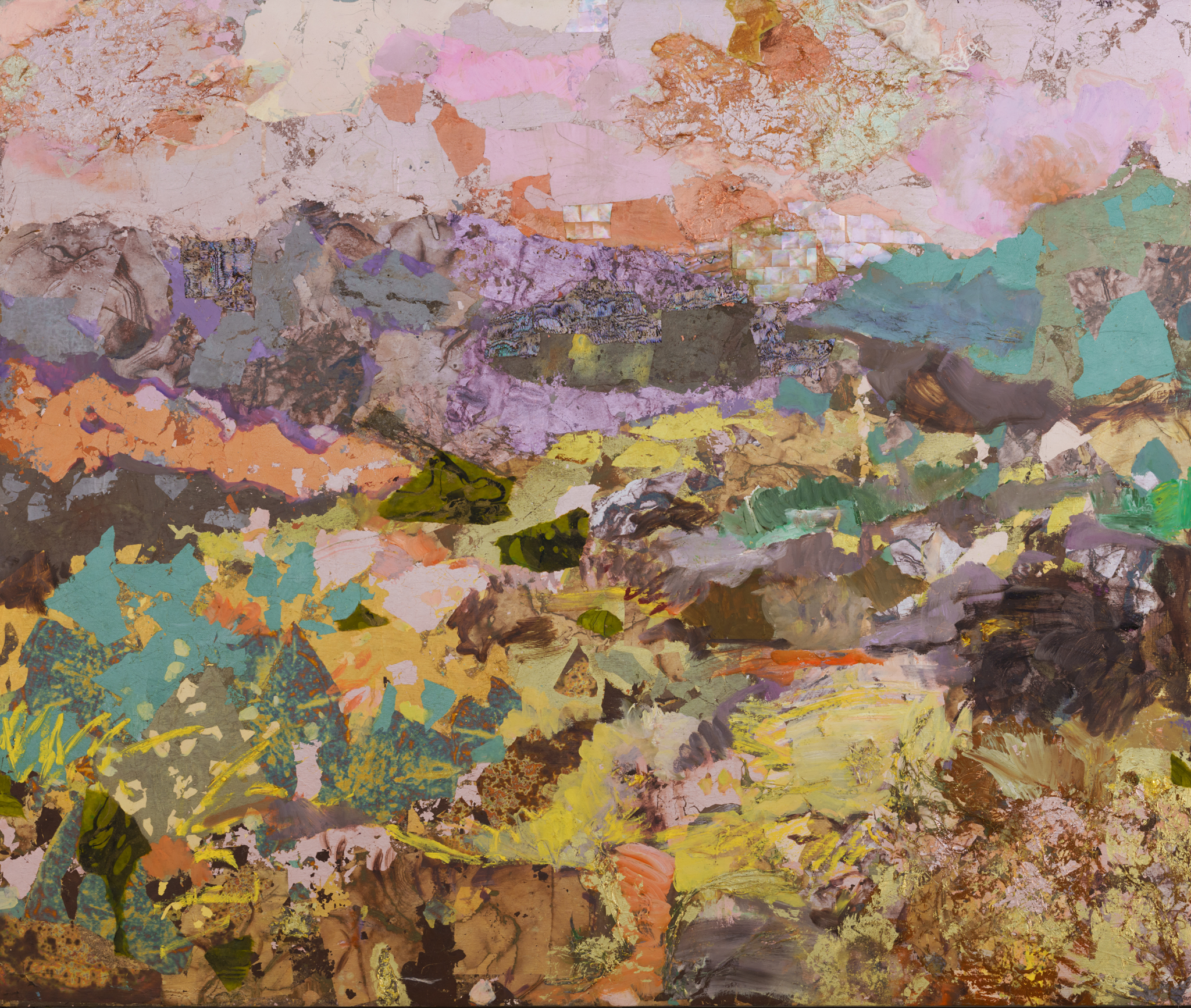
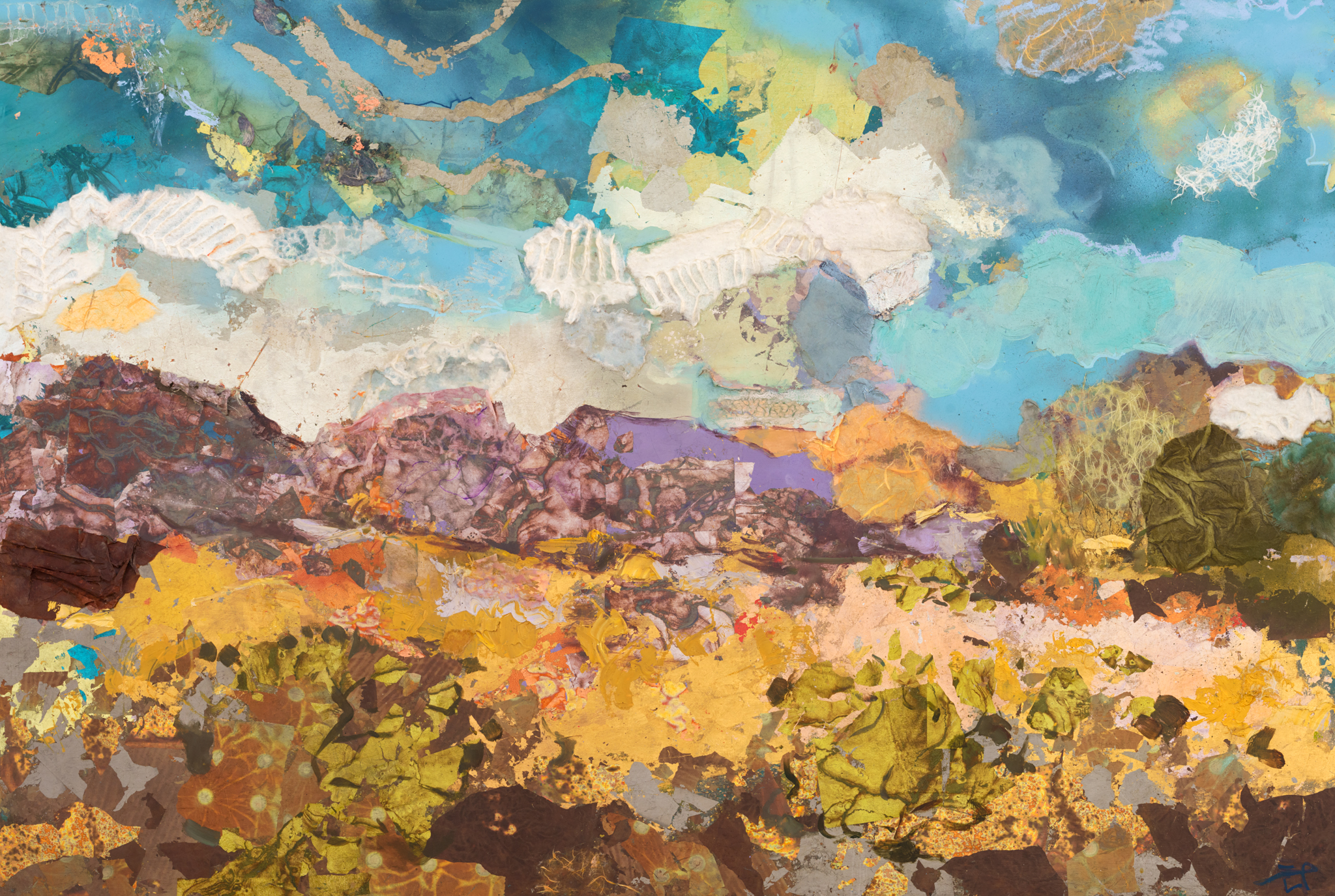
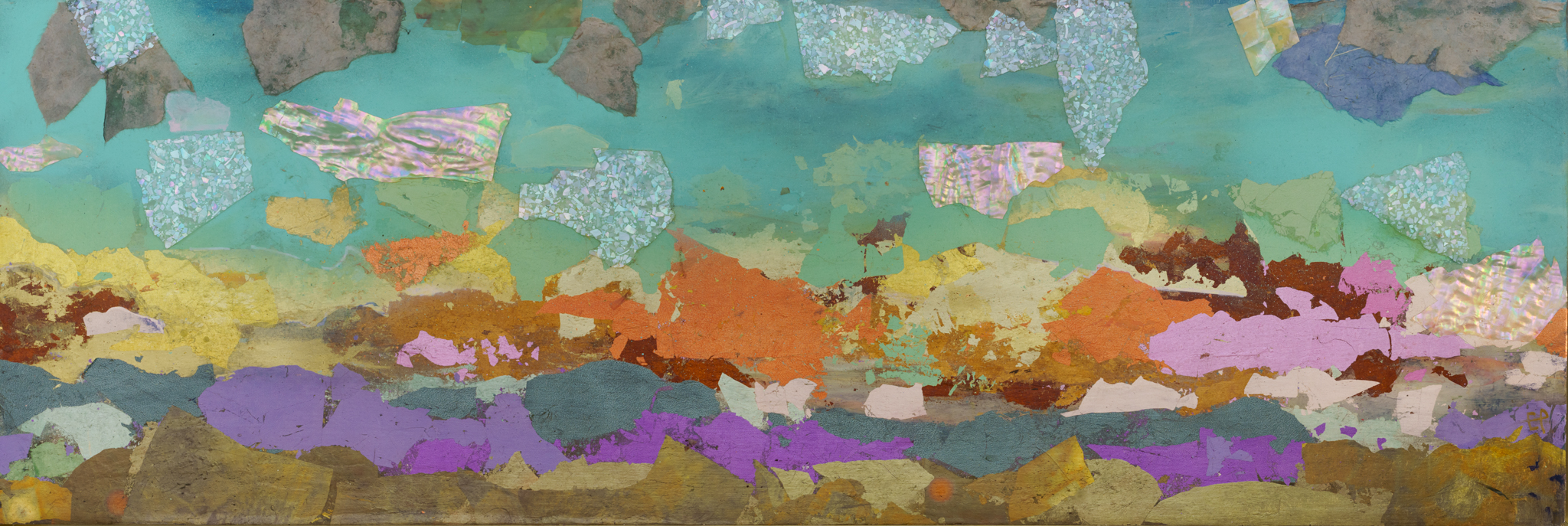
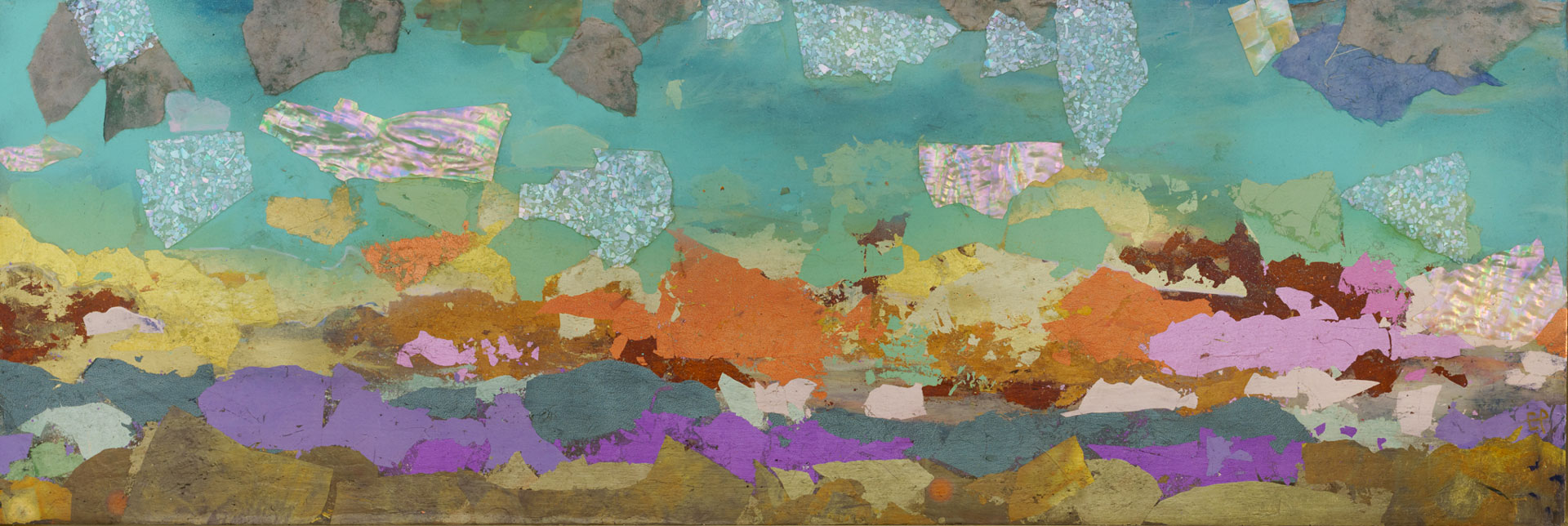
Chandelier Skies
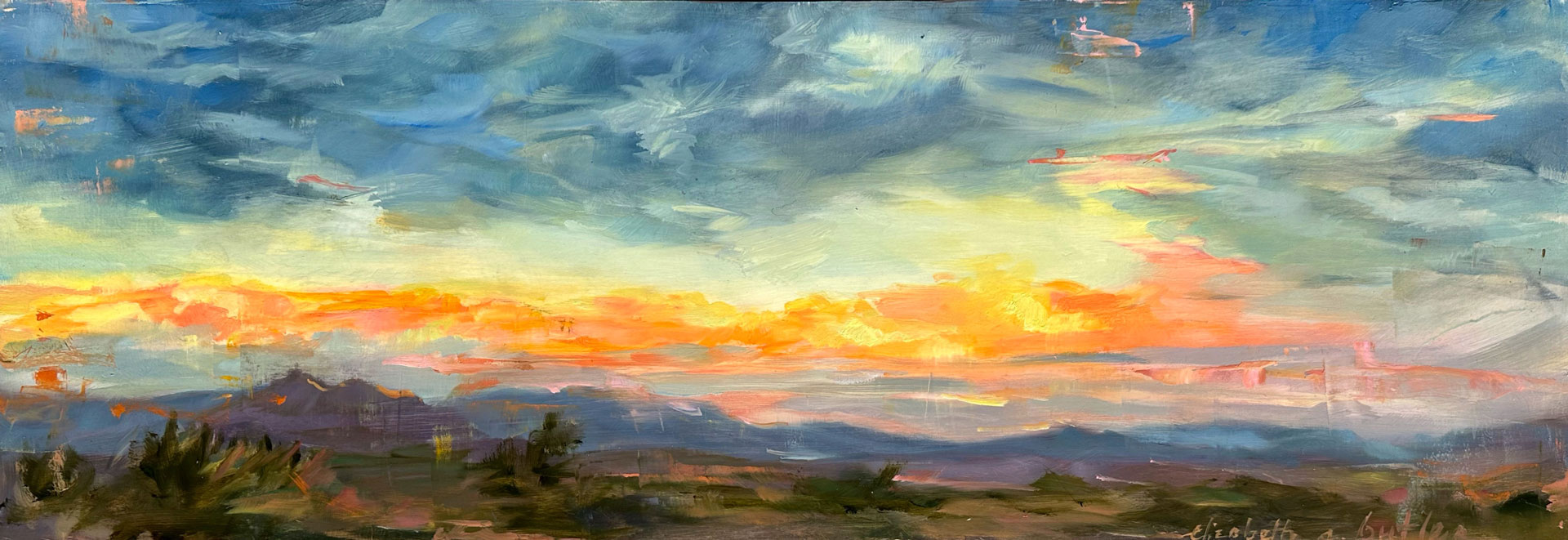
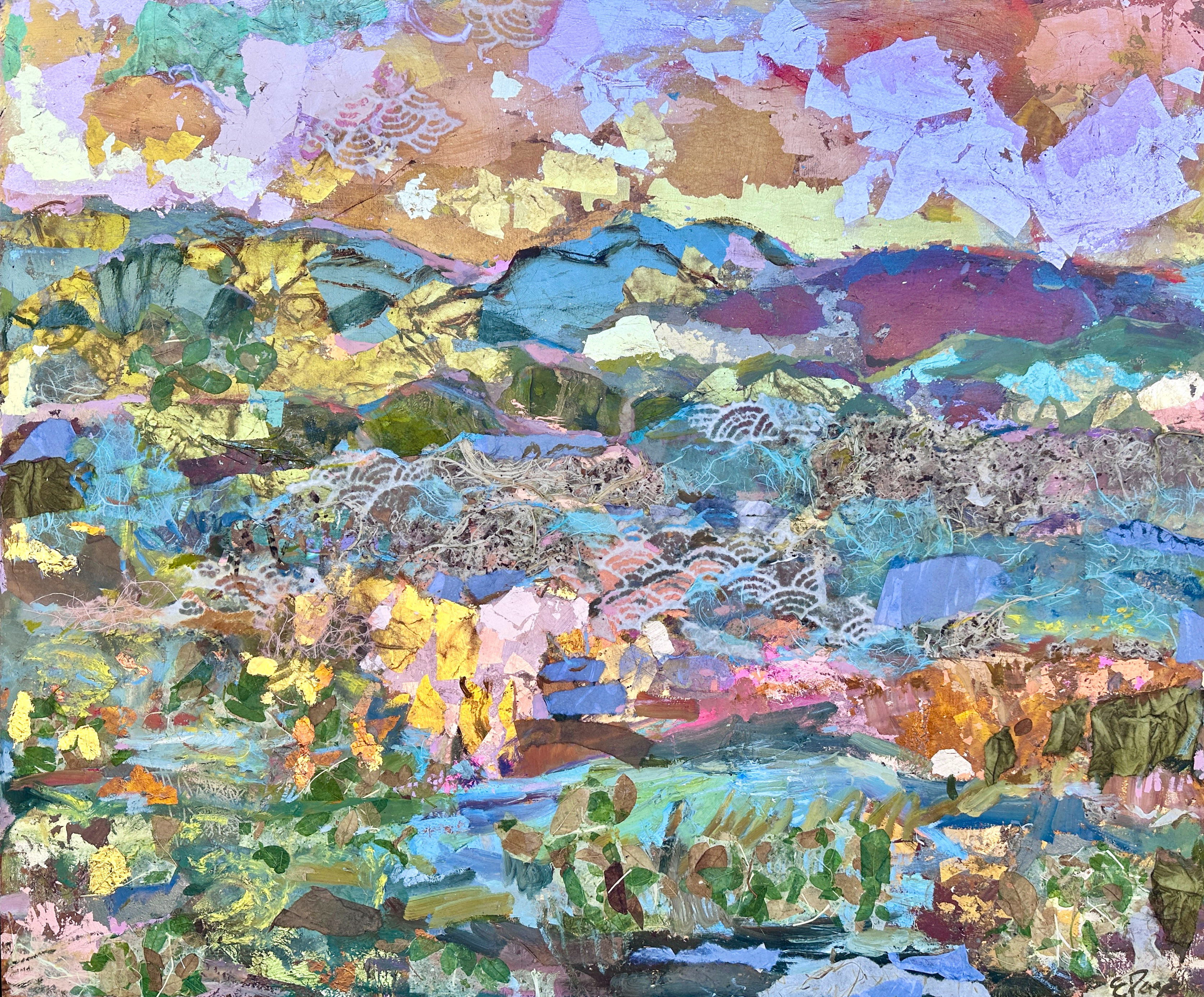
Though a sunset remained as the conceptual foundation of this piece- the specificity of the previous image dissolved. First through a layer of spray-paint to diffuse the sky, then with leaf to cover the mountains and bring out the gold of a sunset. Paper and mother of pearl was placed over the sky like sometimes heavy, sometimes transparent, cloud shapes. With reflective surfaces alongside opaque paper, in shifting light the distinction between horizon and clouds began to dissolve.
In that ambiguity I began seeing sheets of mother-of-pearl suspended overhead like fragments of cloud, layered with suspended paper — luminous surfaces alternating with opaque ones that you could walk through and between.
It was the second time I saw the work as a prototype for an installation.

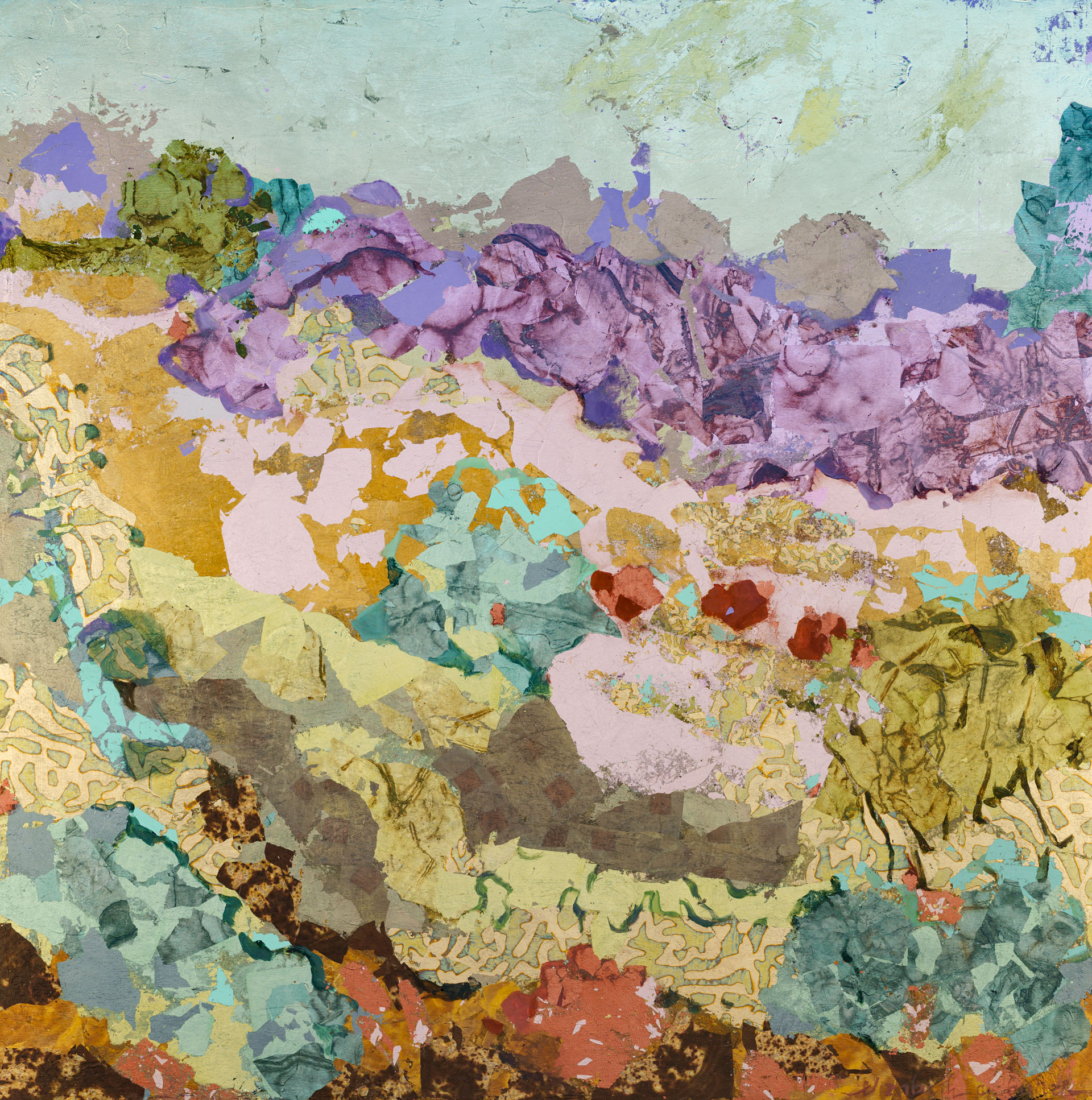
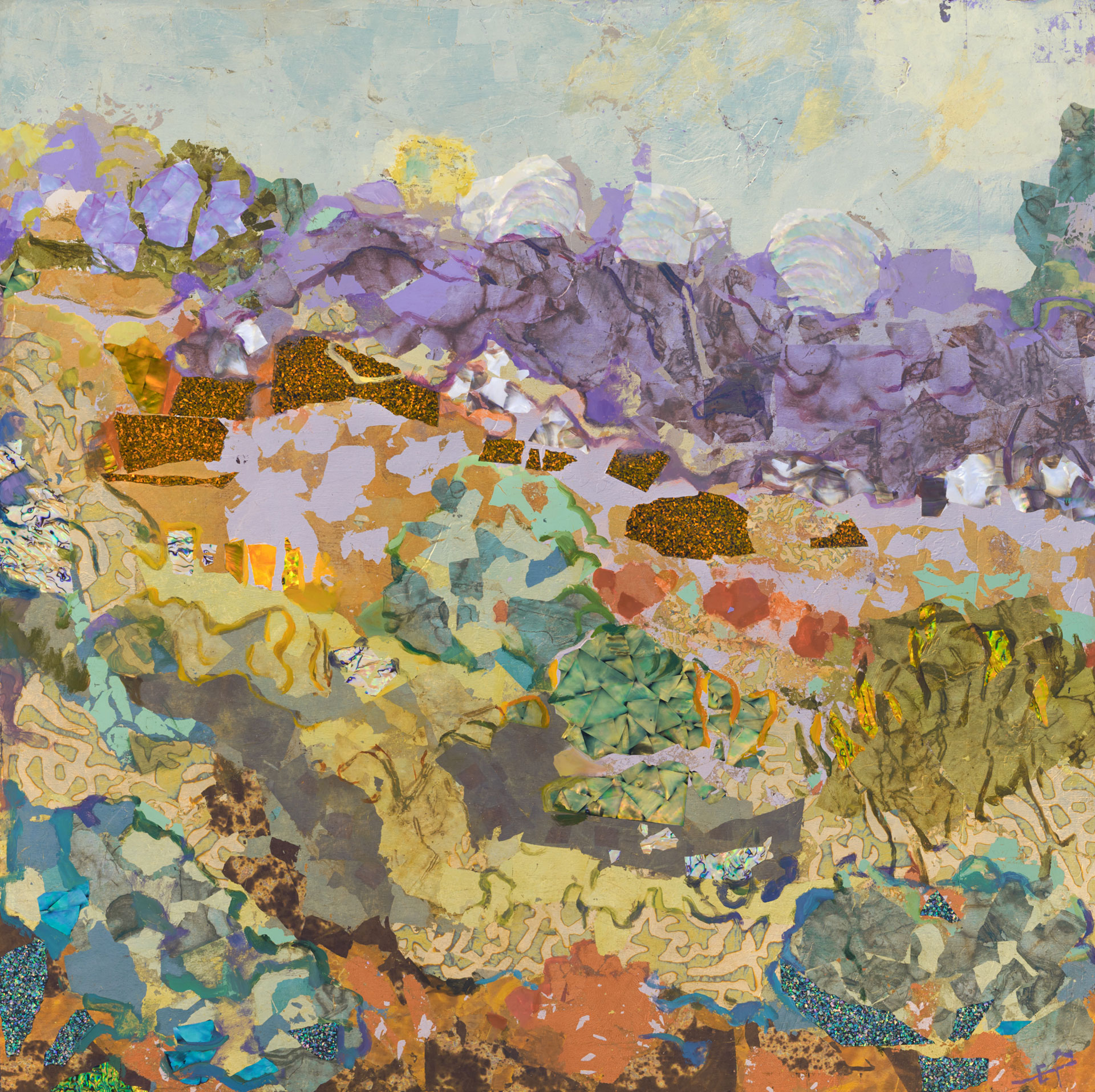
Red Reward
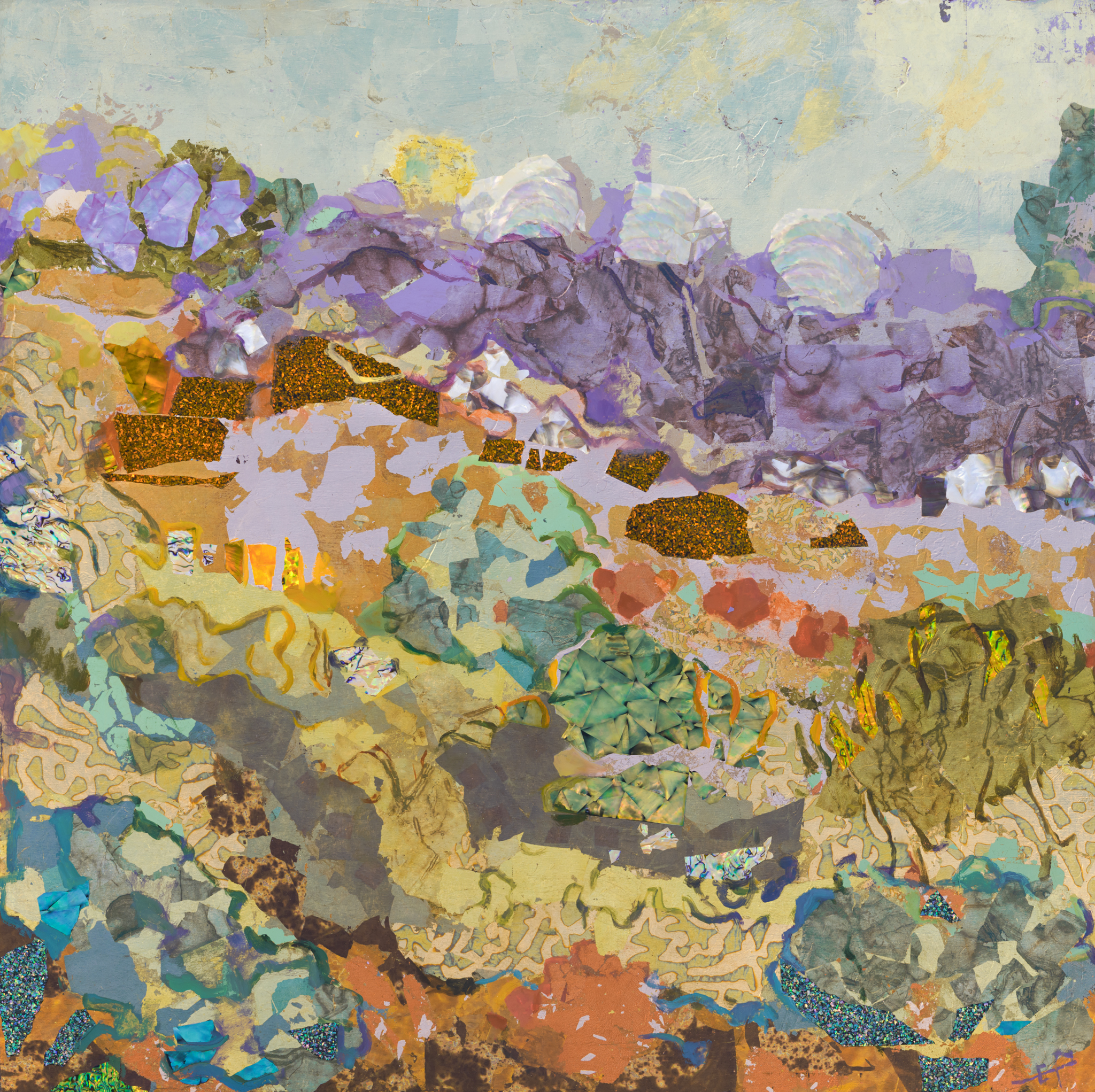
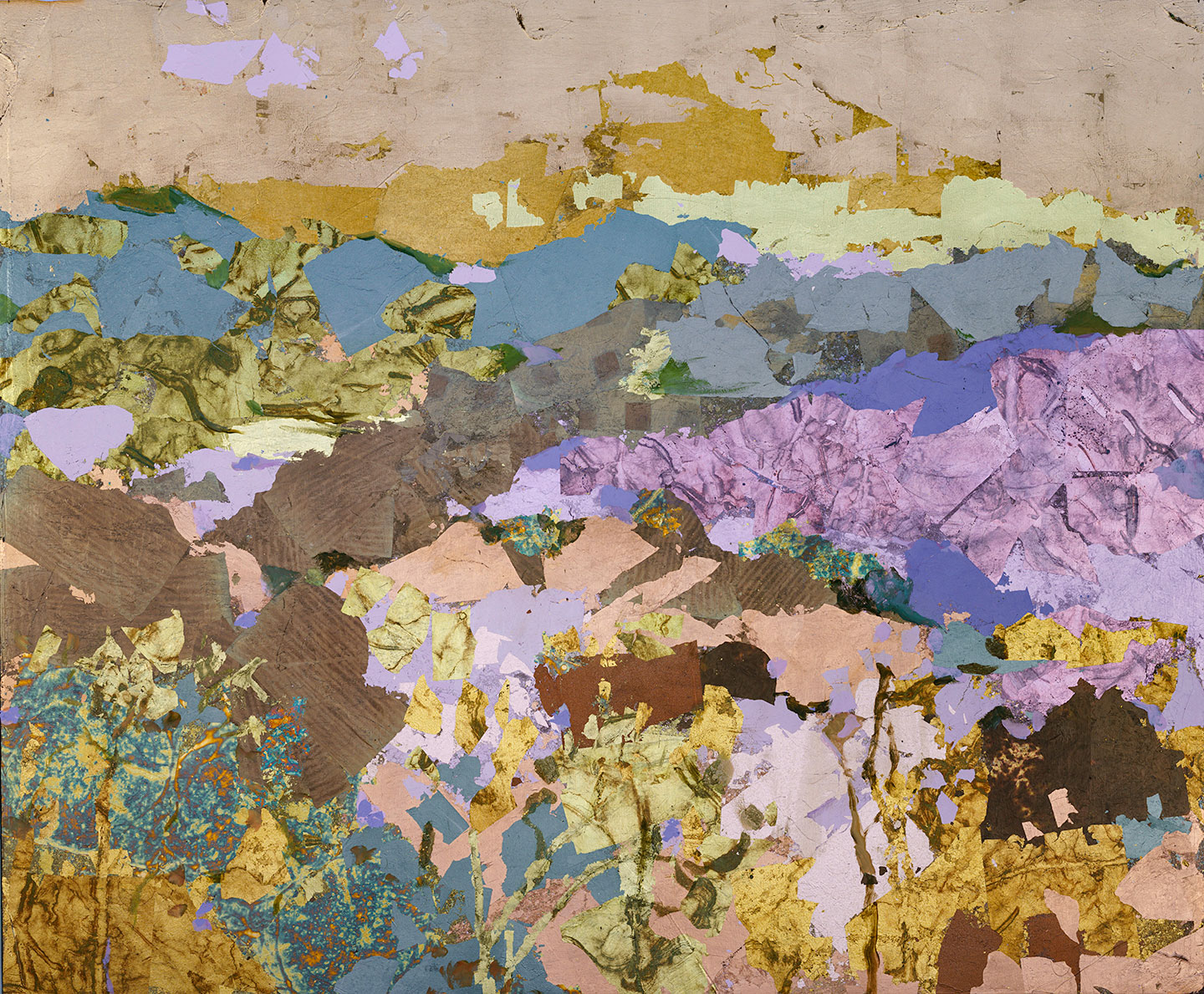
This piece, structurally and compositionally, remained largely the same. The pull to re-enter the piece was a desire to layer texture and increase depth, through marbled silver leaf, mother-of-pearl, and abalone shell.
Working with these materials, something became unmistakable. The patterns in the mother-of-pearl and abalone shell began revealing similar patterns already present in the marbled silver leaf — as if each material were recognizing the other.
The same intelligence shaping patterns in nature continues through the human processes that transform those materials to be used in art— and continues again through my own act of placing them together on the canvas.

Mother-of-Pearl & Abalone Shell
Mother-of-pearl forms inside shells as layers of nacre slowly accumulate over time. Its surface reflects light differently depending on the viewer's position. Embedded within the paintings, these fragments allow forms to shift and reorganize as the viewer moves.
That Mountain Chain
Re-entering this painting meant allowing the landscape to loosen rather than become more defined. Through successive layers of paper, paint, and mica, the surface grew increasingly textured, acquiring a new depth.
From the beginning this work resisted specificity. People often recognized different mountain ranges within it — each viewer locating their own landscape in the forms.
Part of re-entering a painting is locating yourself within it and allowing it to become universal rather than fixed. Instead of depicting a particular place, the painting becomes a terrain you step into.
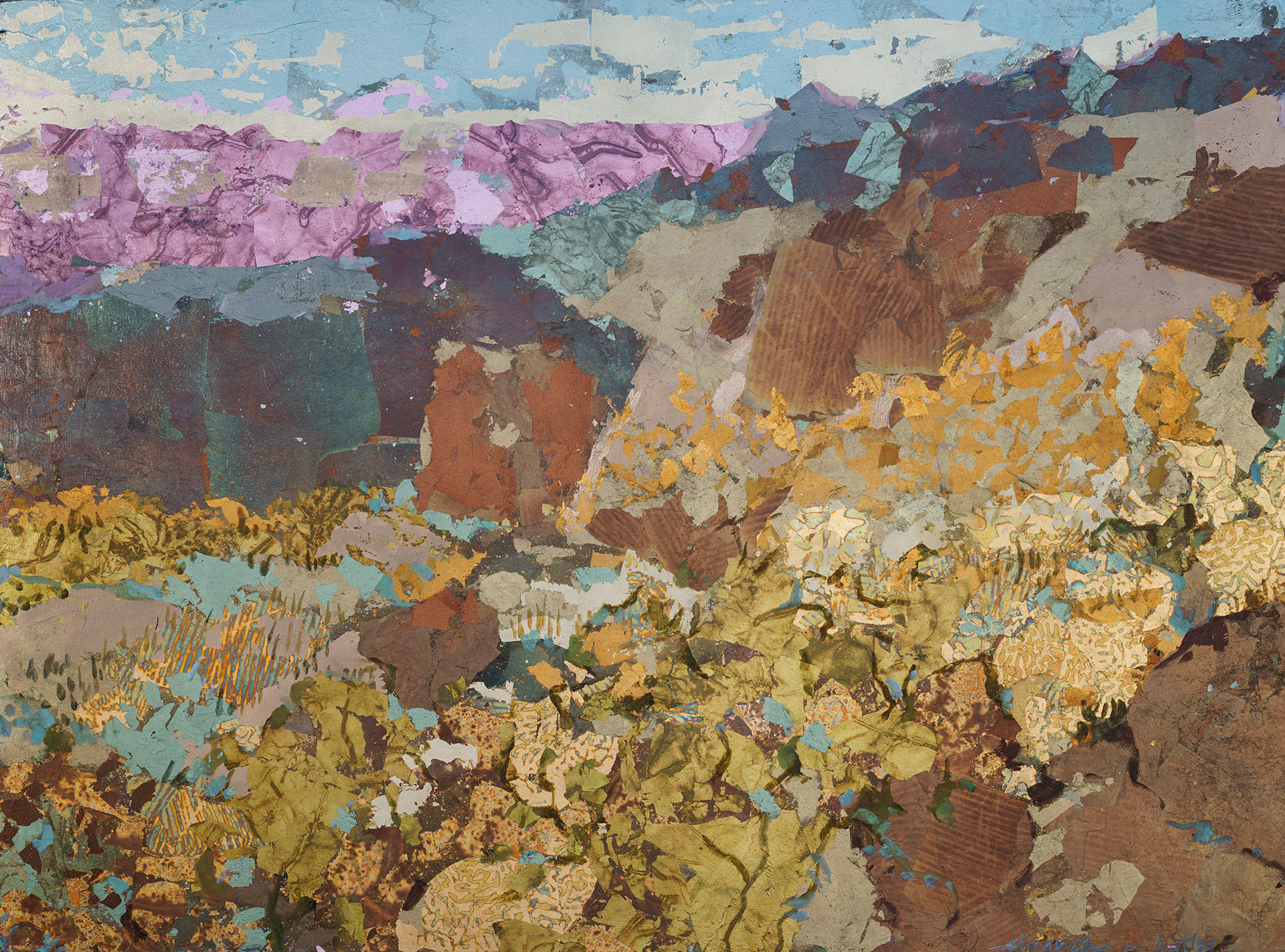

Salt River Horses
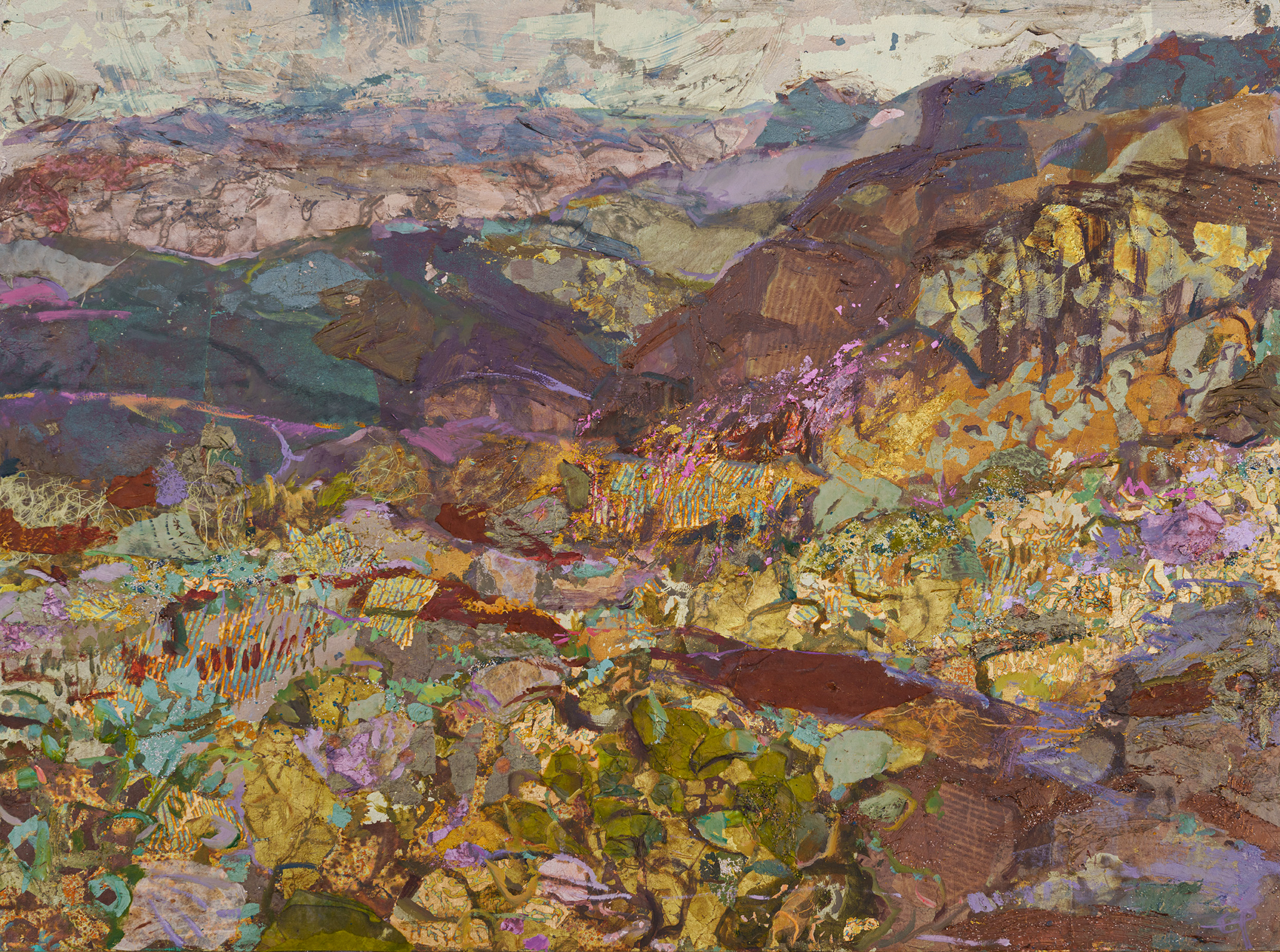
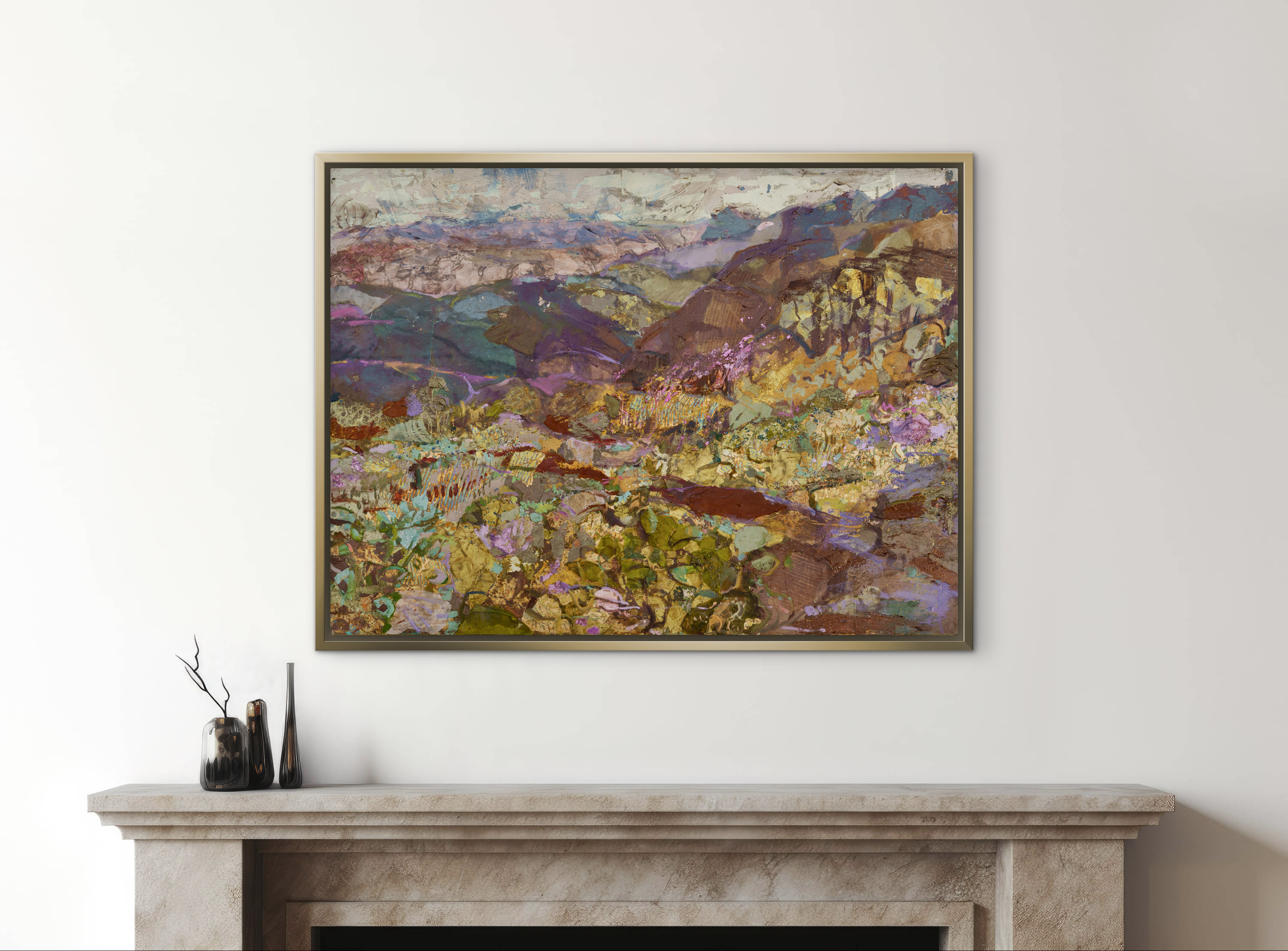
Re-entering this painting brought the investigation to a point of clarity. Over time the surface accumulated layers of paper, gold leaf, and paint — reopened, layered, covered, and returned to once more.
Instead of refining the image, I allowed multiple patterns to exist at once, resisting the instinct to simplify or organize into something controlled. I began looking for the order already present — the relational intelligence embedded within the materials and the forms emerging through them.
The surface grew denser, more chaotic, closer to the way growth actually happens in nature. Plants, terrain, and atmosphere appearing together rather than being separated into parts. The painting asks you to stay with it long enough for those relationships to reveal themselves.
Not something we observe from outside, but something we are already inside.

From Surface to Space
As layers accumulated and reflective materials began shifting light across the surfaces, the work stopped behaving like images and began functioning more like ecological systems.
To see them fully, you have to move around them. Light changes. Forms appear and dissolve. The landscape reorganizes itself depending on where you stand.
That realization opened a larger question: what happens when the viewer can move through the work instead of only around it?
The paintings have become early studies for future installation environments — spaces where the materials and perceptual shifts explored on the canvas extend into three dimensions.
Sheets of paper may hang like underwater forests.
Fragments of reflective shell or metal could shift overhead like fragments of cloud.
Light moves across surfaces as visitors walk through the environment, revealing new relationships with each step.
In these spaces, the landscape is no longer something we observe from outside.
It becomes something we inhabit.
These environments invite visitors to experience what the paintings began to reveal:
that we are not separate from nature, but nature observing itself.
Participation
For Collectors
Collectors interested in acquiring available works from these investigations are welcome to inquire.
FOR CURATORS, INSTITUTIONS, AND COLLABORATING ARTISTS
These investigations are evolving toward large-scale installation environments.