Dress / Undress
What is the connection between adornment, the body, creativity, and power? And specifically, the symbol of the dress.
Dressing is one of the earliest instinctive creative acts many of us experience.
Long before we call it art, we experiment with materials and the power of choice — selecting clothing, dressing dolls, discovering how texture, color, and form change how we feel.
Dress / Undress begins with this instinct.
Through mixed media dress forms and layered materials, the work explores adornment as a creative impulse — one that moves between play, identity, concealment, and revelation.
Dress / Undress began with a simple impulse.
I wanted to paint a dress.
The first painting emerged playfully, through gold and silver leaf, then with layered paper, mother-of-pearl, and oil paint. As the series developed and materials multiplied — plant material, textiles — it started opening larger questions about dressing itself: why we adorn the body, and what creative instincts live beneath adornment.
The governing logic of this work is still emerging. Three elements have begun shaping the investigation, and questions are still surfacing.
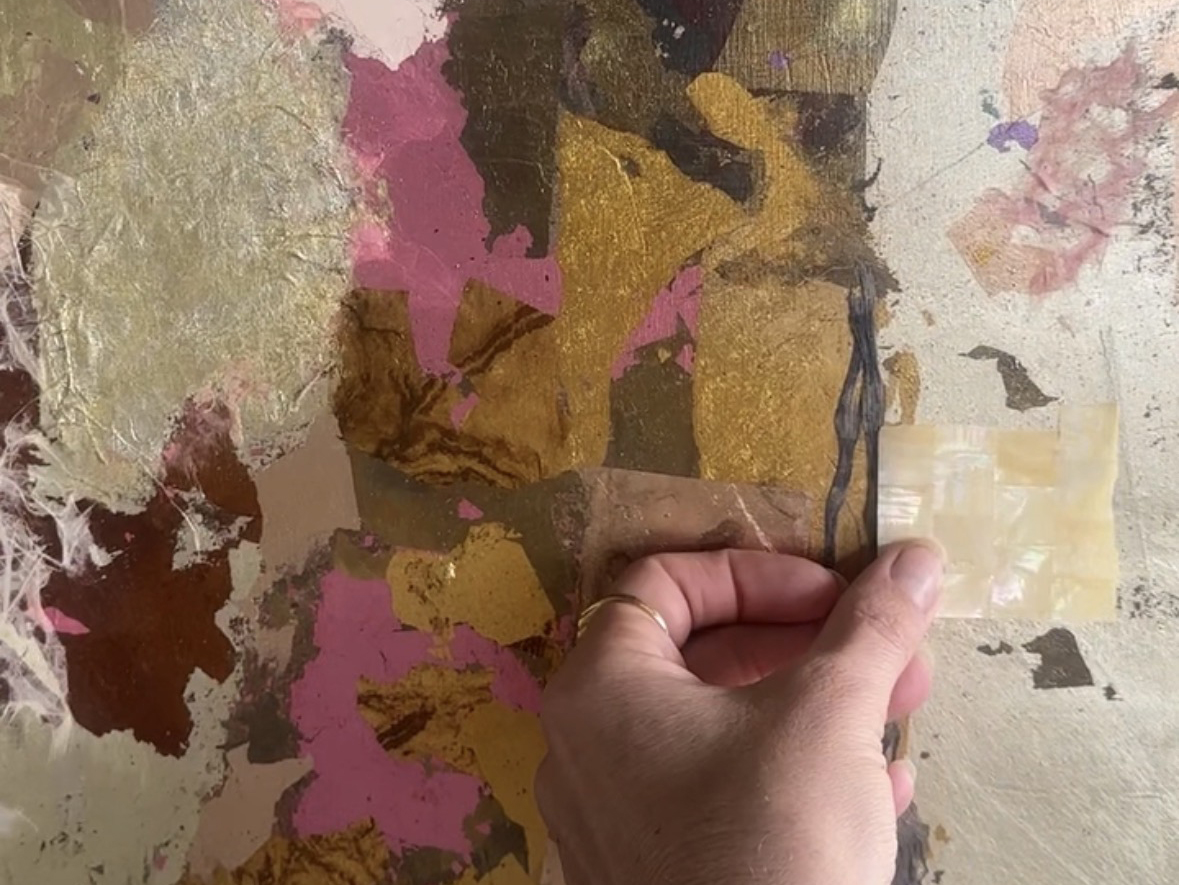
While working on the first piece, I noticed something unexpected. Placing fragments of mother-of-pearl onto the painted dress felt similar to placing a necklace onto my own body. I was adorning the image.
The act of painting the dress had become an act of dressing it.
And the act of dressing is the act of adorning.
And, I was deriving immense satisfaction out of adorning the image of the dress.
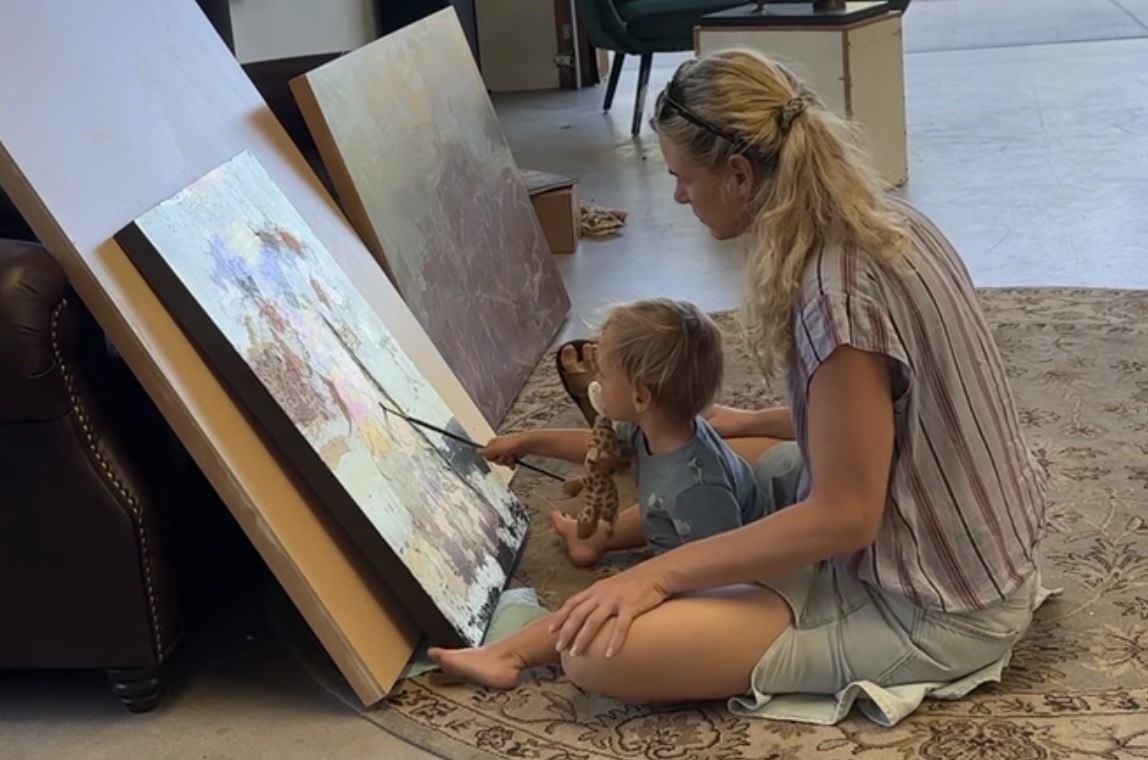
Working on this series, I kept returning to moments of childhood play.
Playing dress-up. Brushing my hair. Choosing dresses. Going through my mother's jewelry box.
When did the freedom to experiment and express give way to concerns about how others would perceive my choices? When did "right and wrong" enter the picture?
Part of this investigation asks if it is possible to reconnect with that birthright of un-self-conscious creativity — and if perhaps the easiest channel there is through dressing an inanimate painted figure, or simply by giving ourselves permission to play dress-up again.
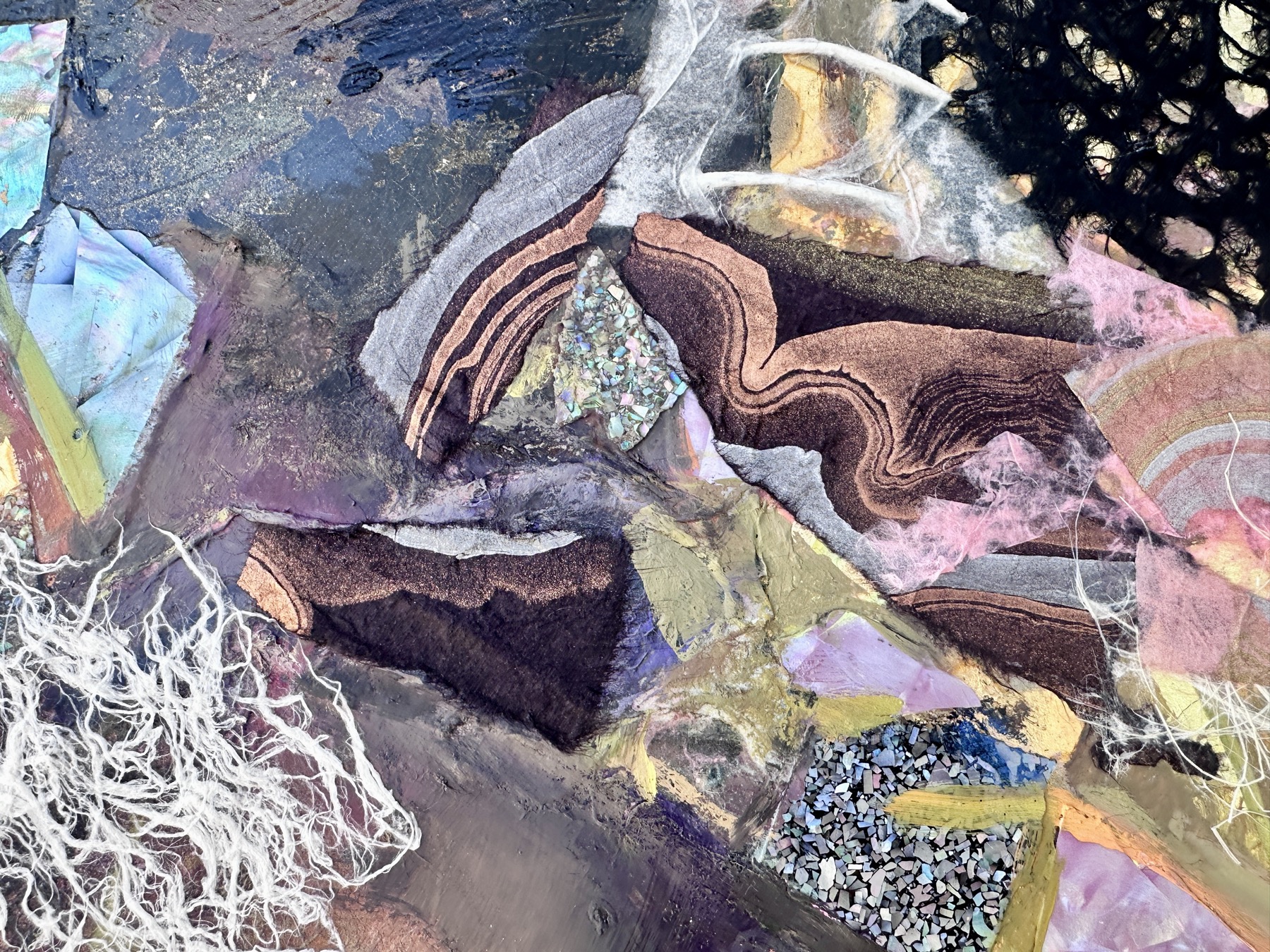
While working on the second dress painting, another set of questions began to surface around the symbolism of dresses themselves.
Are dresses restrictive? When did pants become a symbol of power for a woman — and can a dress be reclaimed as something that holds its own power?
A dress allows the body to be both concealed and revealed — sometimes within the same gesture. The wearer decides what is visible and what remains hidden, and when.
Through that lens, dressing and undressing becomes an act of authorship — a decision about what is shared and what remains private.
The investigation is unfolding through a series of 20 x 30 paintings, of which three are complete.
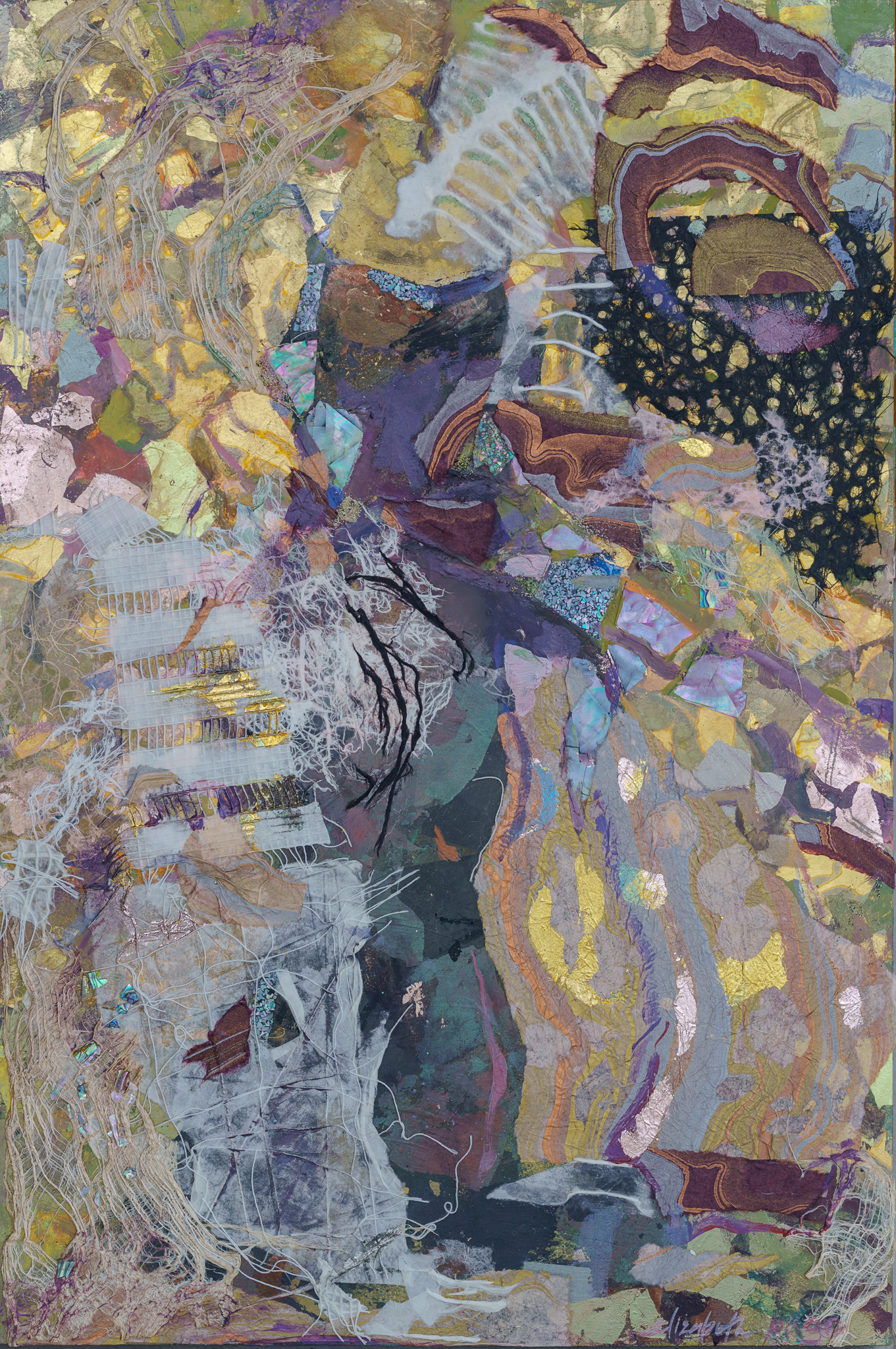
First, A Dress
Fragments of mother-of-pearl and small pieces of paper were layered over the dress form, introducing texture, pattern, and a soft reflective shine across the surface. The patterns within the variegated metal leaf and marbled dyed silver leaf began to resemble textiles — closer to fabric or quilting than traditional painting.
Working with those materials shifted the process in an unexpected way. Instead of painting an image of a dress, I began to feel more like a designer assembling a garment. Placing pearl onto the painted surface felt similar to fastening jewelry onto a body.
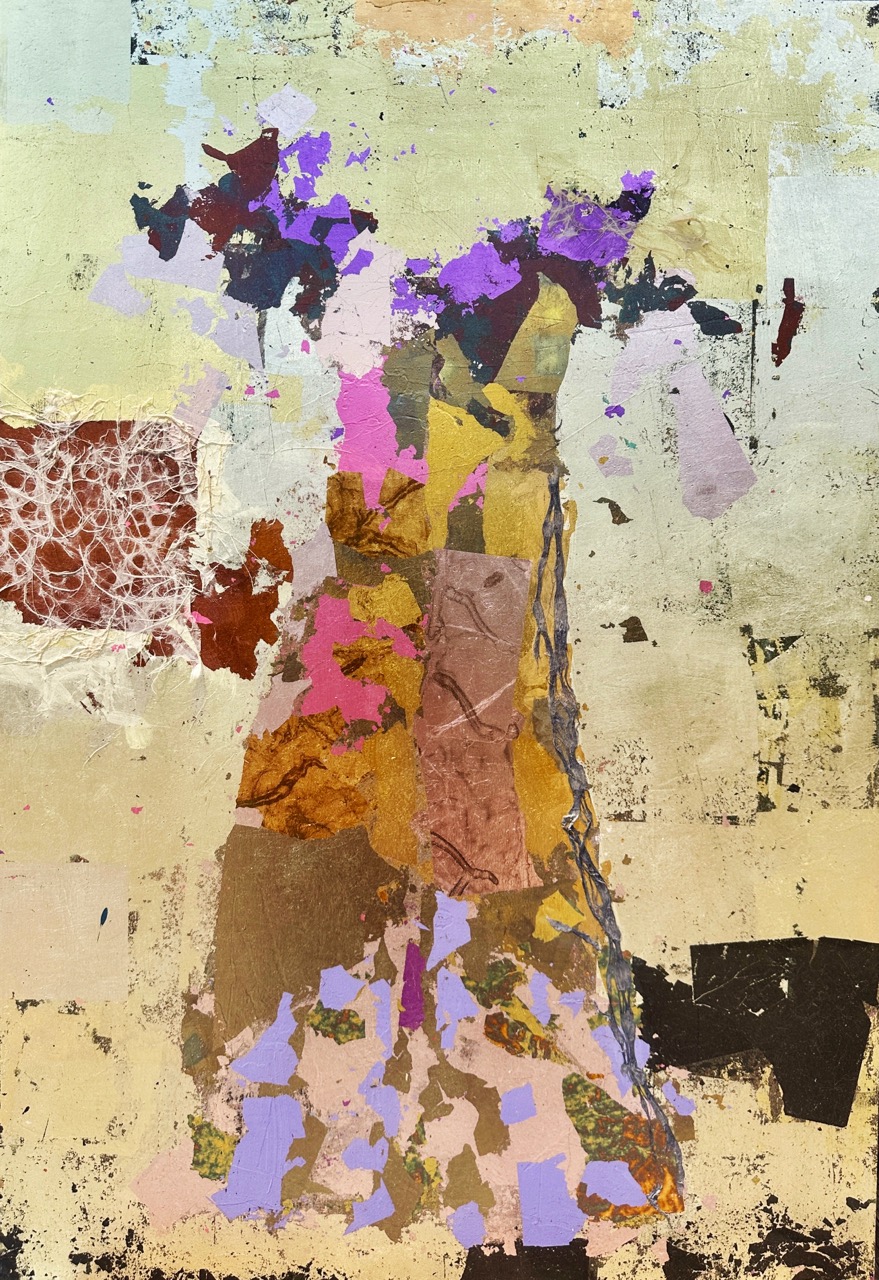
A Second Dress
The second dress painting went through several iterations before settling into its current form.
Layering thick, fibrous mulberry paper over areas of gold leaf, the dress figure began to feel concealed — the material dense and tactile, with fragments of reflective gold leaf still visible beneath. The process revealed something about how a dress can both reveal and conceal, be expressive or constrictive, depending entirely on the wearer's choice.

The Heart of The Matter
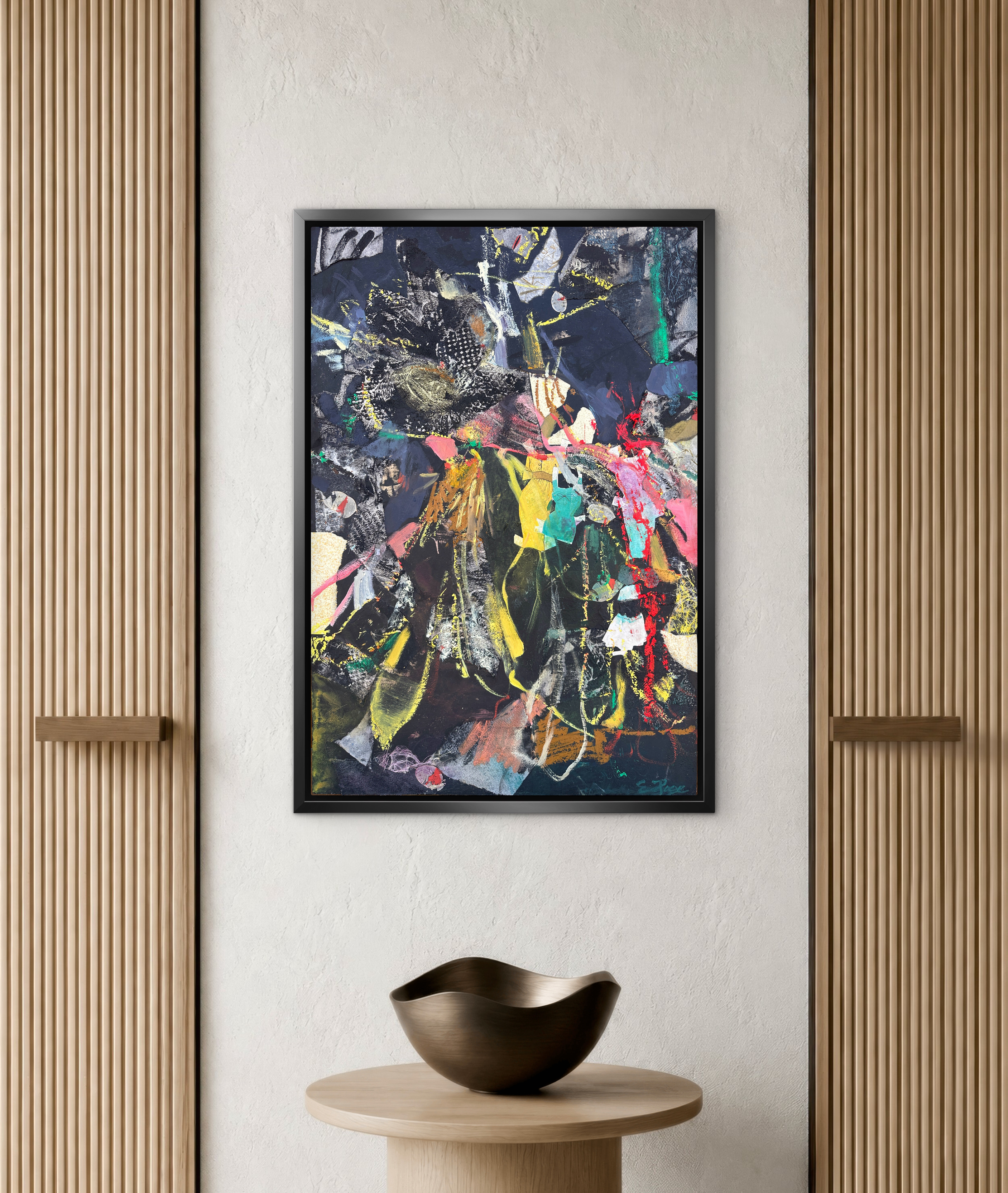
The Heart of the Matter is a gestural piece built through heavy oil stick covering the surface, alongside embroidered cotton textile, paper, black gesso, and embedded paper doll cutouts.
This work continues the conceal/reveal pattern that keeps emerging throughout this investigation into dresses. The paper doll dresses are tightly shaped around the waist, emphasizing the bust and curves. The skin is concealed, but the shape is revealed. I keep returning to the question: is that part of our power?
There is a wild energy in the piece, especially in the frantic oil stick mark-making as it rubs across the textured surface, but there is also a constrained energy and a discomfort underneath it. The mismatch of materials contributes to that tension — heavily textured cotton against flat graphic paper dolls, layered textured papers against a flat panel surface, and the delicate lunaria seed pods embedded throughout.
As I spent time with the piece, repeating vesica piscis shapes began appearing unintentionally. I see them in the lunaria, in the embroidered patterns, and in forms that emerge in the upper half of the work, where shapes could be read as the bust of a dress. One shape appears in white and settled gold within the fibers, another through the embroidery itself. Small openings edged in red suggest additional portals or thresholds within the surface.
The piece circles around a continuing question in this body of work: where does feminine power reside, and how do we make peace with what we have been given as women?

dress no. 4
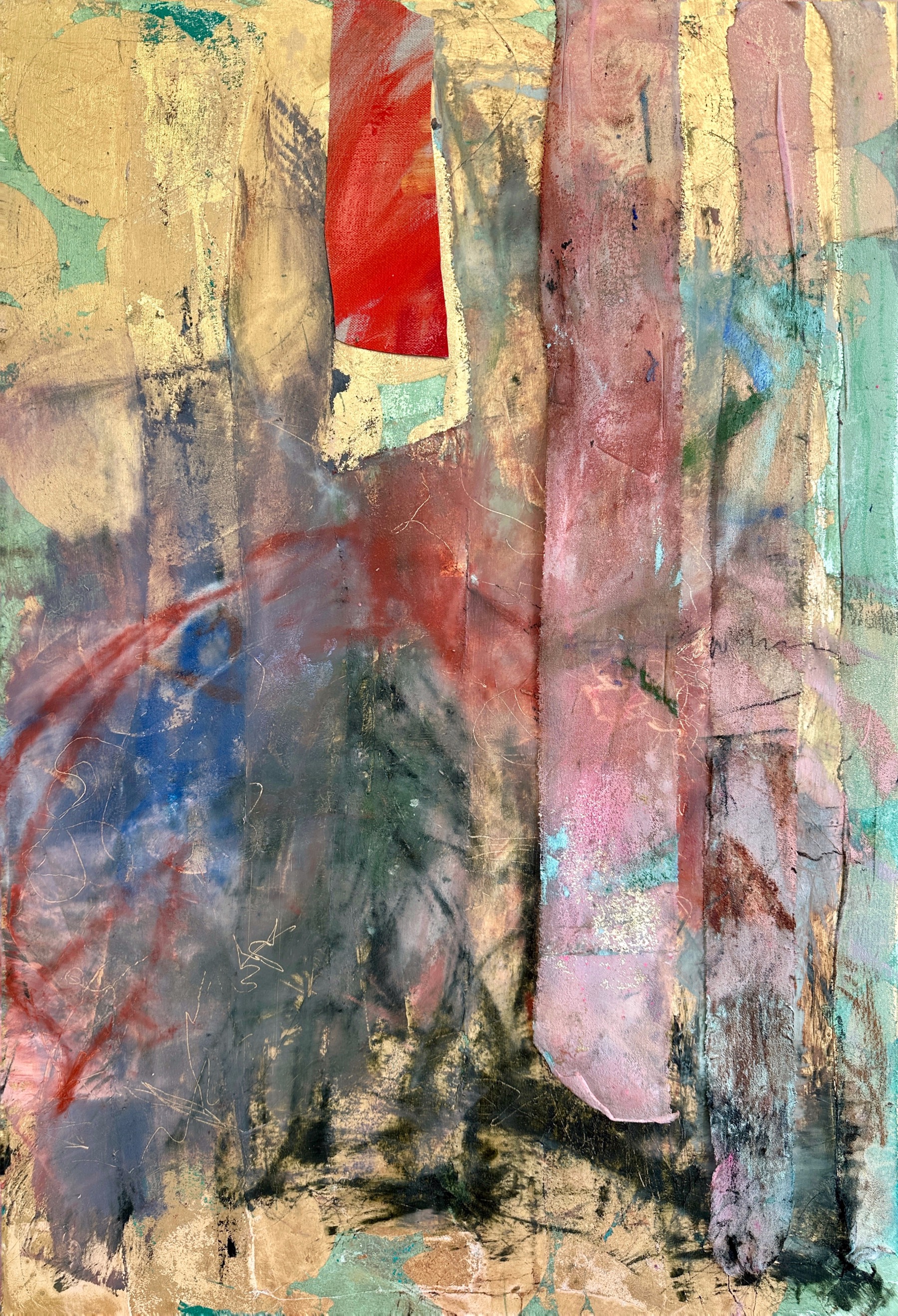
Dress No. 4 continues the investigation through material before image.
The base is gold leaf and dyed silver leaf, laid down in circular shapes that leave a soft imprint on the surface. Over that, strips of transparent silk chiffon — some stained with color, others remaining white — partially mute the reflective ground. The transparency creates a shifting tension between what is visible and what is obscured.
As the work developed, strips of chiffon began coming away from the surface. Rather than resisting this, I pulled them off, worked into what was underneath, and began to see something else emerging. The piece became interactive in my hands before it became interactive in concept — an invitation to lift the gauzy layers and discover what lies beneath.
The circles in the gold leaf, the strips of translucent fabric, the question of what is concealed and what is revealed — all of it began suggesting tights, stockings, the way fabric simultaneously covers and draws attention to the body beneath it.
There may be something here about bypassing self-judgment — about the natural human instinct to want to lift a layer and see what's underneath, before the thinking mind decides whether that's allowed.
Still unfolding.
From Surface to Space
As the series develops, and I return to the question of reconnecting to our original, instinctive creativity, an immersive creative experience is coming into focus.
The experience begins among the paintings — where the investigation first took shape. Here, the work becomes immediately participatory.Fragments of mother-of-pearl are available to be placed directly onto the dress paintings — rearranged, removed, altered.
This invitation to adorn is an invitation to discover your creative instinct through touch and choice without consequences. The same instinct that first revealed itself in the studio now available to anyone who enters the room.
From there, the work expands. Dress forms and figures appear at life scale — the experience is more immersive. The forms carry presence and personhood.
In the final room the experience becomes fully participatory. Life-size paper-doll clothing, mimicking the original painting studies, can be placed onto the painted figures — dressed, undressed, rearranged, reimagined. The figures remain flat. The clothing remains paper-doll-like. Specifically not sculptural or three - dimensional— to stay in the realm of play and ambiguity.
A dress-up box sits nearby. An invitation to play. To reclaim creative intuition.
The paintings are studies — a way of understanding how this environment might become. Many questions are still unfolding as each new dress clarifies what the installation might be.
Participation
For Collectors
Collectors interested in acquiring available works from these investigations are welcome to inquire.
FOR CURATORS, INSTITUTIONS, AND COLLABORATING ARTISTS
These investigations are evolving toward large-scale installation environments.